
The Ass in the Lion's Skin
A fable about an ass disguised as a lion.

Wikipedia / Wikimedia Commons
The fable known as "The Ass in the Lion's Skin" comes from Aesop, with two separate Greek versions recorded in the Perry Index as numbers 188 and 358. Eastern variants also exist, and the story's meaning shifts depending on the version.
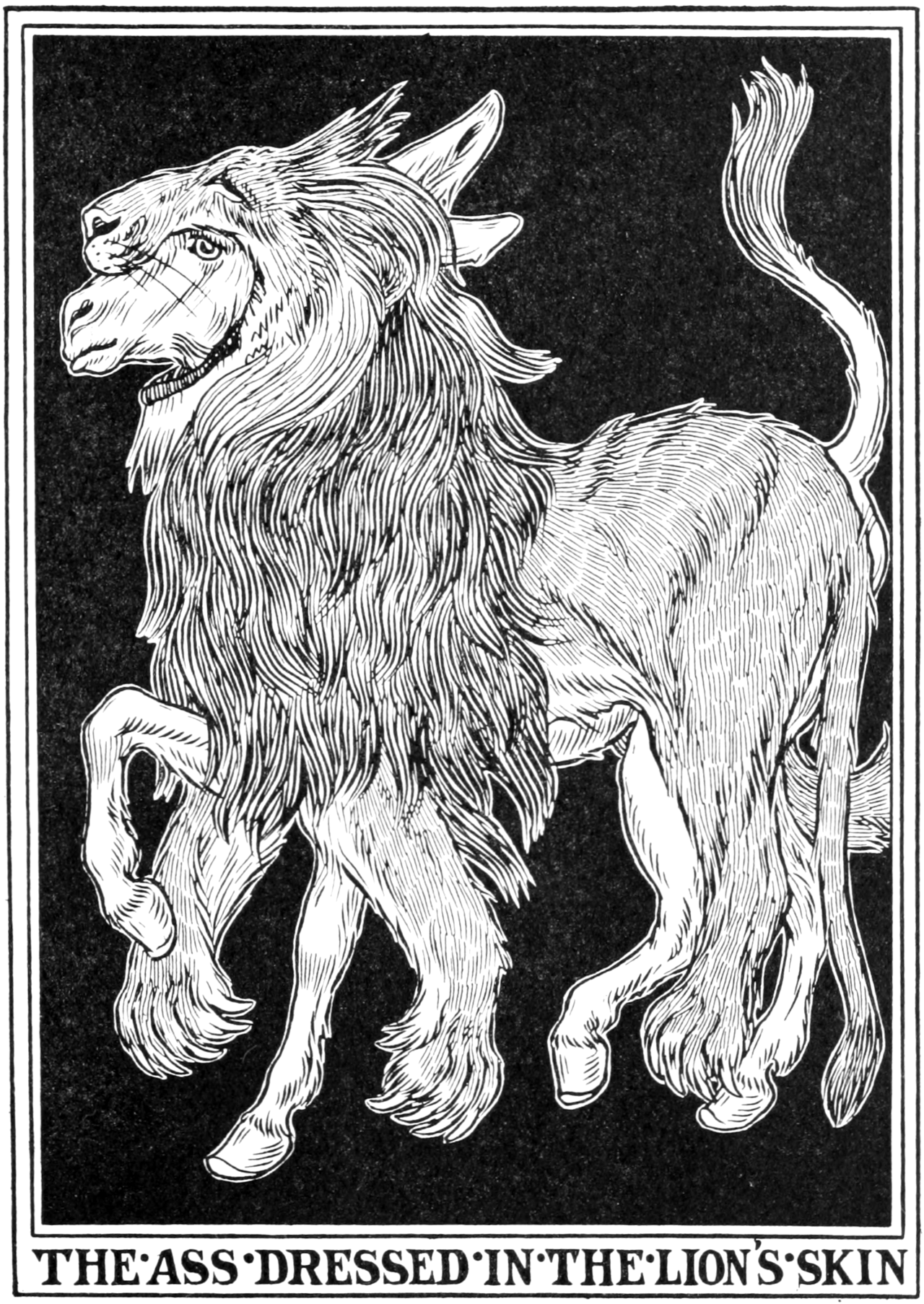
In the first Greek version (Perry 188), a donkey puts on a lion's hide and enjoys scaring other animals. When he tries the same trick on a fox, the fox hears his bray and says he might have been frightened if not for the sound. The usual moral is that clothes may hide a fool, but his words reveal him. This version appears as Fable 56 in Babrius's collection.
The second Greek version (Perry 358) has the donkey wearing the skin to graze in peace, but his ears give him away, and he is punished. A Latin version by Avianus from the late fifth century was later adapted by William Caxton, whose moral warns against presumption. Literary references to this fable appear from classical times through the Renaissance, including in Shakespeare's *King John*. La Fontaine's Fable 5.21 (1668) also follows this version, drawing the moral that appearances are not to be trusted, since clothes do not make the man.
In India, the same situation appears in Buddhist scriptures as the Sihacamma Jataka. There, the donkey's master puts a lion's skin on the animal and lets it feed in grain fields. Villagers are too scared to act until one raises a crowd; when they chase the donkey, it brays and is beaten to death. A related tale, the Sihakottukha Jataka, plays on the motif of being betrayed by one's voice: a lion fathers a son on a she-jackal, and the child looks like a lion but howls like a jackal, so he is told to stay silent. A common European variant appears in the Ladino Sephardic proverb, *asno callado, por sabio contado* ("a silent ass is considered wise"). An English equivalent is "a fool is not known until he opens his mouth." A similar biblical proverb says, "Even a fool is counted wise when he holds his peace; when he shuts his lips, he is considered perceptive."
The story and its variants appear idiomatically in several languages. In Latin, it is *leonis exuviae super asinum*. In Mandarin Chinese, the phrase is "羊質虎皮" (yang zhi hu pi), meaning "a goat in a tiger's skin." In the Chinese story, a goat disguises itself as a lion but continues eating grass; when it sees a wolf, instinct takes over and it runs away.
Later allusions include an
- type
- Fable
- origin
- Greek (Aesop's Fables)
- Perry Index numbers
- 188 and 358
- known_for
- Moral about disguise and voice betraying identity
- variants
- Greek, Latin, Indian, Chinese, European
Lore & Background
Of the two Greek versions, the one catalogued as number 188 in the Perry Index concerns an ass that puts on a lion's skin and amuses himself by terrifying all the foolish animals. At last coming upon a fox, he tries to frighten him also, but the fox no sooner hears the sound of his voice than he exclaims, 'I might possibly have been frightened myself, if I had not heard your bray.' The moral of the story is often quoted as, clothes may disguise a fool, but his words will give him away. This version appears as Fable 56 in the collection by Babrius.
The second version is listed as number 358 in the Perry Index. In this the ass puts on the skin in order to be able to graze undisturbed in the fields, but he is given away by his ears and is chastised. In addition to the Greek versions, there is a Latin version by Avianus, dating from the later fifth century. This version was adapted by William Caxton, with the moral cautioning against presumption. Literary allusions to this fable have been frequent since classical times and into the Renaissance, such as in William Shakespeare's King John. La Fontaine's Fable 5.21 (1668) also follows this version. The moral La Fontaine draws is not to trust to appearances, because clothes do not make the man.
Reader's Guide
The Ass in the Lion's Skin has been a recurring motif in literature and folklore across cultures. In India, the same situation appears in Buddhist scriptures as the Sihacamma Jataka, where the ass's master puts the lion's skin over his beast, and turns it loose to feed in the grain fields. The village watchmen are usually too terrified to do anything, but finally one of them raises the villagers, and when they chase the ass, it begins to bray, betraying its true identity, and is then beaten to death. A related tale, the Sihakottukha Jataka, plays on the motif of being given away by one's voice. A common European variant appears in the Ladino Sephardic proverb, asno callado, por sabio contado: 'a silent ass is considered wise.' An English equivalent is 'a fool is not known until he opens his mouth.' The story and its variants are alluded to idiomatically in various languages, including Latin (leonis exuviae super asinum) and Mandarin Chinese (羊質虎皮, 'a goat in a tiger's skin').
In the 19th century, the fable was put to use by American political cartoonist Thomas Nast, when it was rumoured that Republican president Ulysses S. Grant intended to stand for election for an unprecedented third term. Nast combined this with a false report of animals escaping from the Central Park Zoo in a cartoon for the November 7 edition of Harpers Weekly, titled 'Third Term Panic,' depicting a donkey in a lion's skin labelled 'Caesarism.' In the 20th century, C. S. Lewis put the fable to use in the final volume of The Chronicles of Narnia, where a donkey is tricked into wearing a lion's skin so as to deceive the simple-minded into believing that Aslan the lion has returned. Kathryn Lindskoog identifies the Avianus version as the source of this episode.
Did You Know?
- The fable has two distinct Greek versions, catalogued as numbers 188 and 358 in the Perry Index.
- In the Indian variant, the Sihacamma Jataka, the ass is beaten to death after betraying itself by braying.
- The fable was used by American political cartoonist Thomas Nast in a cartoon titled 'Third Term Panic' in 1874.
- C. S. Lewis used the fable in the final volume of The Chronicles of Narnia, with Kathryn Lindskoog identifying the Avianus version as the source.
The Two Greek Versions and Their Distinct Morals
The fable exists in two distinct Greek iterations, each catalogued separately in the Perry Index. The first, number 188, follows an ass who drapes itself in a lion's pelt and takes pleasure in scaring off gullible creatures. Its triumph is cut short when it encounters a fox; the moment the ass opens its mouth, the fox recognizes the bray and calls out that only the voice revealed the true nature of the beast. The moral drawn here is that outward trappings can mask a fool, but the words spoken will always expose the truth. This is the version preserved as Fable 56 in Babrius's collection. The second Greek telling, Perry Index 358, shifts the motivation: the ass dons the lion's hide simply to graze peacefully in the fields without being disturbed. Here the disguise fails not through speech but through the ears that poke through the pelt, and the ass is punished for its deception. A Latin rendering by Avianus, composed in the later fifth century, followed this second variant, and William Caxton later adapted it with a moral warning against presumption.
Global Folk Motifs and Proverbial Echoes
The core scenario—an animal in a predator's disguise being unmasked—travels far beyond the Greek world. In Indian Buddhist scriptures, the Sihacamma Jataka retells the tale: an ass's owner places a lion's skin over the beast and releases it into grain fields while traveling. Village watchmen cower in fear, but one eventually rallies the villagers. As they pursue the creature, it brays, revealing itself, and is beaten to death. A companion Jataka, the Sihakottukha, inverts the motif: a lion fathers a cub on a jackal, and the offspring looks like its lion father but howls like a jackal, so it is counseled to keep silent. These themes echo in a Ladino Sephardic proverb declaring that a silent ass is counted wise, in the English saying that a fool is not recognized until he speaks, and in a Biblical verse noting that even a fool appears perceptive when he holds his tongue. In Mandarin Chinese, the idiom "yang zhi hu pi" renders the image as a goat wearing a tiger's skin, where the disguised goat's instinct to flee from a wolf undoes the ruse.
Literary Allusions from Antiquity to the Renaissance
Writers and poets have drawn on this fable with remarkable frequency from classical antiquity through the Renaissance. William Shakespeare wove an allusion to it into King John, demonstrating that the story had become a recognized literary reference by the Elizabethan era. In the seventeenth century, Jean de La Fontaine adapted the second Greek version for his Fable 5.21, published in 1668. La Fontaine's moral centers on the unreliability of appearances, insisting that clothing does not make the man. Earlier, the Latin tradition carried the tale forward through Avianus's fifth-century rendering, which William Caxton then brought into English with a caution against presumption. The fable also generated a fixed Latin idiom, leonis exuviae super asinum, meaning a lion's skin over an ass, used to describe the absurdity of grandeur draped over mediocrity. In Chinese literary and colloquial culture, the parallel expression "yang zhi hu pi" carries the same satirical weight, and the associated story of a grass-eating goat in a tiger's pelt fleeing at the sight of a wolf underscores the theme of instinct betraying pretense.
Modern Political and Literary Resonance
The fable's satirical power has kept it alive in modern political and literary contexts. In 1874, American political cartoonist Thomas Nast seized upon the story during speculation that President Ulysses S. Grant might seek an unprecedented third term in 1876. Coinciding with a false rumor that animals had escaped the Central Park Zoo and were loose in New York streets, Nast merged the two news items into a cartoon for the November 7, 1874, issue of Harper's Weekly. Titled "Third Term Panic," the image shows a donkey wearing a lion's skin, labeled "Caesarism," scattering smaller animals that represent various political interests. In the twentieth century, C. S. Lewis deployed the fable in the final volume of The Chronicles of Narnia, where a donkey is tricked into donning a lion's pelt to fool simple-minded characters into believing that Aslan has returned. Kathryn Lindskoog has identified the Avianus version as the likely source for this Narnian episode, linking the medieval Latin tradition to a beloved modern fantasy narrative.
Gallery

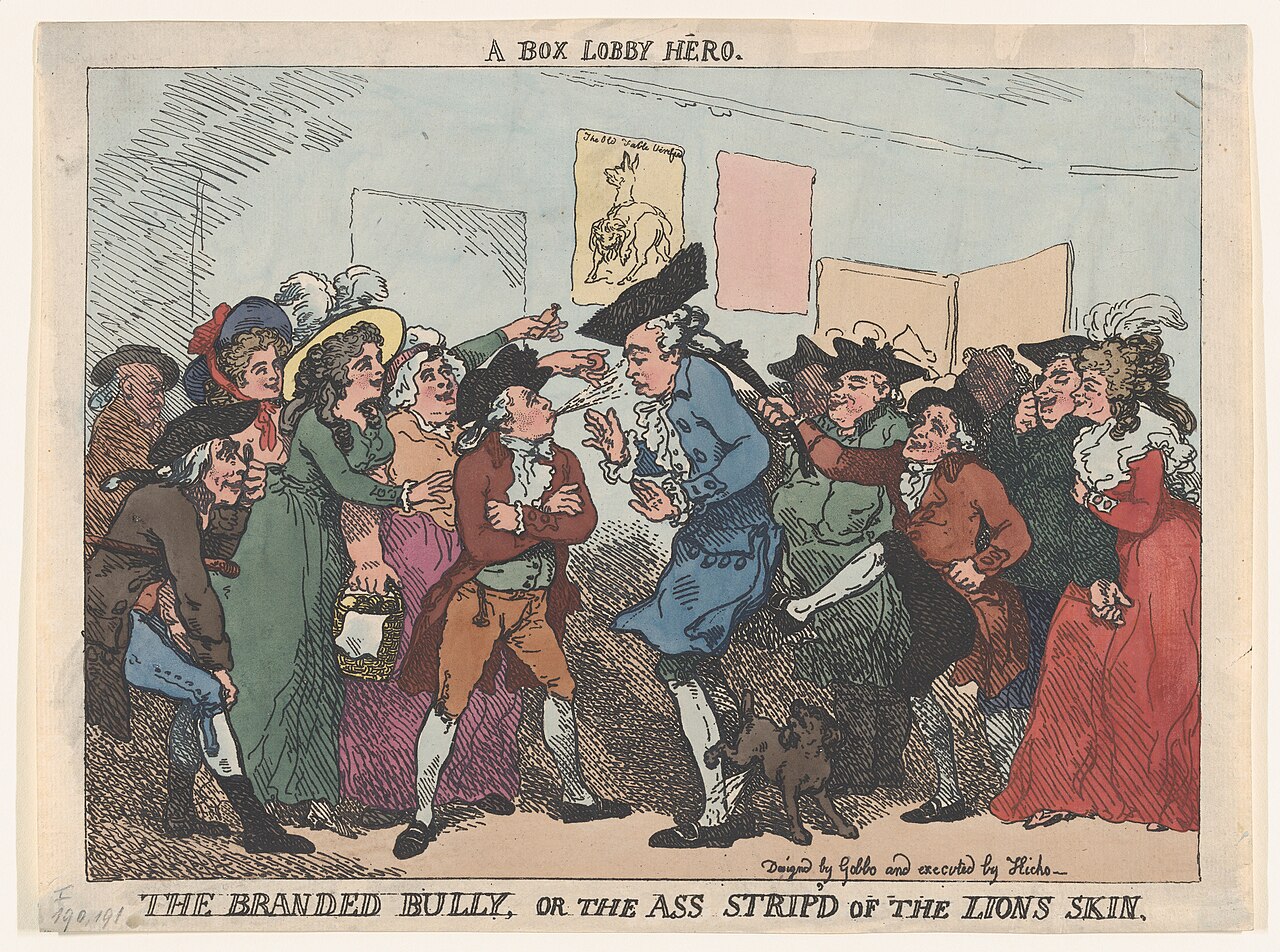
Frequently Asked Questions
Who is the protagonist in 'The Ass in the Lion's Skin'?
The central character is a donkey who steals or borrows a lion's pelt and drapes it over himself to impersonate the king of beasts. In the Indian retellings, this ass is typically portrayed as a brash, attention-seeking animal rather than a victim or hero.
What actually happens in the plot of this fable?
The disguised ass roams through the countryside, bellowing and frightening smaller creatures into fleeing. His ruse finally unravels when he opens his mouth to roar at a fox, and the unmistakable bray that comes out gives away his true identity.
How does the story end?
The fox calmly points out that she would have been terrified had she not heard the characteristic donkey bray beneath the lion's skin. The ass is left exposed and humiliated, his borrowed majesty stripped away in a single sound.
What moral or lesson does the Indian variant emphasize?
The core teaching is that no amount of outward showmanship can mask who you truly are once you speak or act in your own voice. Indian tellings sometimes broaden the lesson to warn against social climbing and the fragility of borrowed status.
Why does this fable matter in the broader Indian folklore tradition?
It is one of the Aesopic tales (Perry 188 and 358) that traveled into Indian storytelling alongside Panchatantra-adjacent collections, where its meaning shifted to fit local ideas about caste, pretense, and the limits of disguise. Its survival across Greek, Latin, Indian, Chinese, and European lineages makes it a key example of how a single moral skeleton can be re-skinned in every culture.
More in Indian folklore 1-24
Elsewhere in the Indian Folklore universe
Spotted an error? Know more?
This is a living reference — every entry is fact-audited, and reader corrections feed straight into our audit queue. Suggest an edit · See this site's audit record