
Baba Shivo
Hindu folk deity and warrior-hero venerated as Rudra Ansh.

Wikipedia / Wikimedia Commons
Baba Shivo, also called Goran Baba, is a Hindu folk deity from the 13th–14th century, worshipped in Jammu and Kashmir and Himachal Pradesh. He is seen as a warrior-hero and an avatar of Rudra Ansh. Little is known about his life beyond that he was the son of Raja Ladh Dev (also called Raja Ladhha) and Queen Kalavati (also known as Rani Kalli).
His father, Raja Ladh Dev, ruled Pattan, a historical capital of Kashmir near the valley’s center. The remains of four palaces, two within the town limits, still stand in Pattan tehsil. According to the Rajatarangini, the Kashmiri king Shankaravarmma founded the town of Pattana.
Legend says Shivo was born after his parents received the blessings of Guru Gorakhnath. The king and queen had no children. Their kulguru read the king’s kundali and told him he could have either the kingdom or a child. Following yogis’ advice, the king gave the throne to his younger brother, and he and the queen left for the Sauram hills to practice austerity and pray to Gorakhnath. After years of worship there, they moved to Samotha and prayed for twelve more years. Gorakhnath then blessed them, saying a son would be born as an incarnation of Rudra, to be named Shiv Dev (Shivo). Nine months later, Shivo was born in Samotha.
As a young man, Shivo worked for Raja Mal Dev of Jammu. A lion began killing livestock, and the king offered a reward to anyone who killed it. One day, on his way to Jammu, Shivo killed the lion with his sword, cut off its ears, and hid them under a palace pillar. Recognizing Shivo’s divine nature, the king touched his feet, and Shivo gave him spiritual teachings.
Shivo played a dotara, a stringed instrument. In the hills of Goran near Samotha lived the Kharadkhatri Rajputs. When Shivo played, their women came out to listen. The Kharadkhatris considered his playing madness and plotted to kill him while he was absorbed in music. They cut off his head, which remained where it fell, while his body traveled to Goran, where a temple was later built. Most of the Kharadkhatris were said to have died from Baba’s curse; others fled and changed their clan names. It is believed that Baba Goran grants the wishes of sincere devotees. Many make requests and later offer a bhandara (charity kitchen) at the temple. Goat sacrifices are also made in his name. Baba Shivo is the kuldev (family deity) of the Sarmal clan of Suryavanshi Dogra
- born
- Samotha (holy land)
- died
- Goran hills (beheaded)
- field
- Folk deity, warrior-hero
- nationality
- Indian (Jammu and Kashmir / Himachal Pradesh region)
- known_for
- Avatar of Rudra Ansh; killing a lion; patron deity of Sarmal Clan of Suryavanshi Dogra Rajputs
Lore & Background
According to legend, Shivo was born with the blessings of Guru Gorakhnath, who blessed his parents Raja Ladh Dev and Rani Kalli to have a child like Lord Shiva, whose name was conferred on the child. King Ladh Dev had no child, until his kulguru told him he could have only one thing in his destiny: either the kingdom or a child. On the recommendation of yogis, he left his throne to his younger brother and went with the queen to Sauram hills, then to Samotha, where they prayed to Gorakhnath for twelve years. Gorakhnath blessed them, saying a son would be born who would be the incarnation of Rudra, and he should be named Shiv Dev (Shivo). After nine months, Shivo was born in Samotha.
When he grew up, he worked for Raja Mal Dev of Jammu. A lion began killing the public's animals; the king announced a prize for whoever killed it. Shivo saw the lion, killed it with his sword, cut off its ears, and put them under a palace pillar. The king realized he was a godly man and touched his feet; Shivo gave spiritual gyaan to him. Shivo played a musical instrument, the dotara. In the hills of Goran lived Kharadkhatri Rajputs. When Shivo played, the women came out to listen. The Kharadkhatri found his playing insane and conspired to kill him while he played. They cut off his head, which remained there; his body traveled to Goran, where a temple was later constructed. Most Kharadkhatris were killed by his curse; others left and changed their Gots.
Reader's Guide
Baba Shivo, also known as Goran Baba, is a significant folk deity in the Jammu and Kashmir and Himachal Pradesh regions, worshipped by both Hindu and Muslim communities. His legend blends themes of renunciation, divine blessing, martial prowess, and martyrdom. The story of his birth—granted by Guru Gorakhnath after his parents gave up a kingdom—underscores the value of austerity and devotion. His act of killing a lion and his subsequent spiritual instruction to a king highlight his dual role as warrior and sage. The manner of his death, beheaded while playing the dotara, and the subsequent curse on his killers, reinforces his status as a powerful, protective figure. The annual Baba Shivo Chhadi pilgrimage from Samotha to Goran and the wrestling match held at his shrine are living traditions that maintain his cult. His role as the Kuldev (clan deity) of the Sarmal Clan of Suryavanshi Dogra Rajputs ties him to specific lineage identities. The practice of offering bhandara (charity kitchen) and goat sacrifices at his temple reflects ongoing devotional practices. The shrine attracts devotees mainly on Sunday and Tuesday, and Baba Shivo is believed to fulfill wishes of those who pray with true heart and strong determination.
Did You Know?
- Baba Shivo was born after his parents, Raja Ladh Dev and Rani Kalli, gave up their kingdom and performed austerity for twelve years at Samotha.
- He killed a lion with his sword and placed its ears under a palace pillar, leading Raja Mal Dev to recognize him as a godly man.
- He was beheaded by Kharadkhatri Rajputs while playing the dotara; his head remained at the spot while his body traveled to Goran.
- The Baba Shivo Chhadi pilgrimage takes place annually from Samotha to Goran.
Origins and the Legend of Birth
Baba Shivo's origin story is among the most elaborate in Jammu-Kashmir folk tradition. His father, Raja Ladh Dev (also called Raja Ladhha), ruled from Pattan, and his mother was Queen Kalavati, known in local lore as Rani Kalli. Despite their royal standing, the couple remained childless. When the king consulted his kulguru about his kundali, the astrologer delivered a stark verdict: his destiny permitted only one of two things—either the kingdom or a child. Acting on the counsel of yogis, Ladh Dev handed the throne to his younger brother, and the royal couple withdrew to the Sauram hills to undertake tapasya. After years of austerity there, they journeyed to Samotha, where they prayed to the yogi Gorakhnath for twelve full years. At last, Gorakhnath granted their plea, foretelling the birth of a son who would be an incarnation of Rudra and who must be named Shiv Dev. Nine months later, the child arrived in the sacred land of Samotha, and the name Shivo endured.
The Kingdom of Pattan and Historical Context
Baba Shivo's lineage is anchored in one of Kashmir's most storied seats of power. His father held the throne at Pattan, a town that served as a historical capital of the Kashmir Valley, situated near its geographic center. The Rajatarangini, the classical chronicle of Kashmir, records that the king Shankaravarmma was responsible for establishing the settlement of Pattana. The tehsil of Pattan still preserves the physical memory of this royal past, with the ruins of four palaces scattered across the area, two of them falling within the modern municipal boundaries. This setting gives Shivo's legend a tangible historical backdrop: he was not a figure conjured in a vacuum but the son of a ruling dynasty in a valley with a deep literary and architectural record. Yet, despite this royal pedigree and the existence of a classical text that names the town, virtually no verifiable historical documentation survives about Shivo himself. What remains is the rich oral tradition of Jammu and Himachal Pradesh, where he is remembered as a warrior-hero and an avatar of Rudra Ansh, venerated across both communities.
The Lion Slaying and Service in Jammu
In his adulthood, Shivo left the hills and entered the service of Raja Mal Dev, the king of Jammu, working within the royal palace. It was during this period that the most celebrated episode of his life unfolded. A lion had descended into the region, preying on the livestock of the common people, and the king had publicly declared a reward for whoever could slay the beast. One day, while traveling toward Jammu, Shivo encountered the lion and dispatched it with a single stroke of his sword. Rather than simply leaving the carcass, he severed the creature's ears and placed them beneath one of the palace pillars as proof. When the king discovered the evidence, he recognized Shivo as a man of divine stature, prostrated himself, and touched the young warrior's feet. In return, Shivo imparted spiritual gyaan to the ruler. This episode crystallizes the dual identity that defines Baba Shivo in the folk imagination: part martial hero, part spiritual guide, a figure who could command a battlefield and a court with equal authority.
The Dotara, the Betrayal, and the Living Shrine
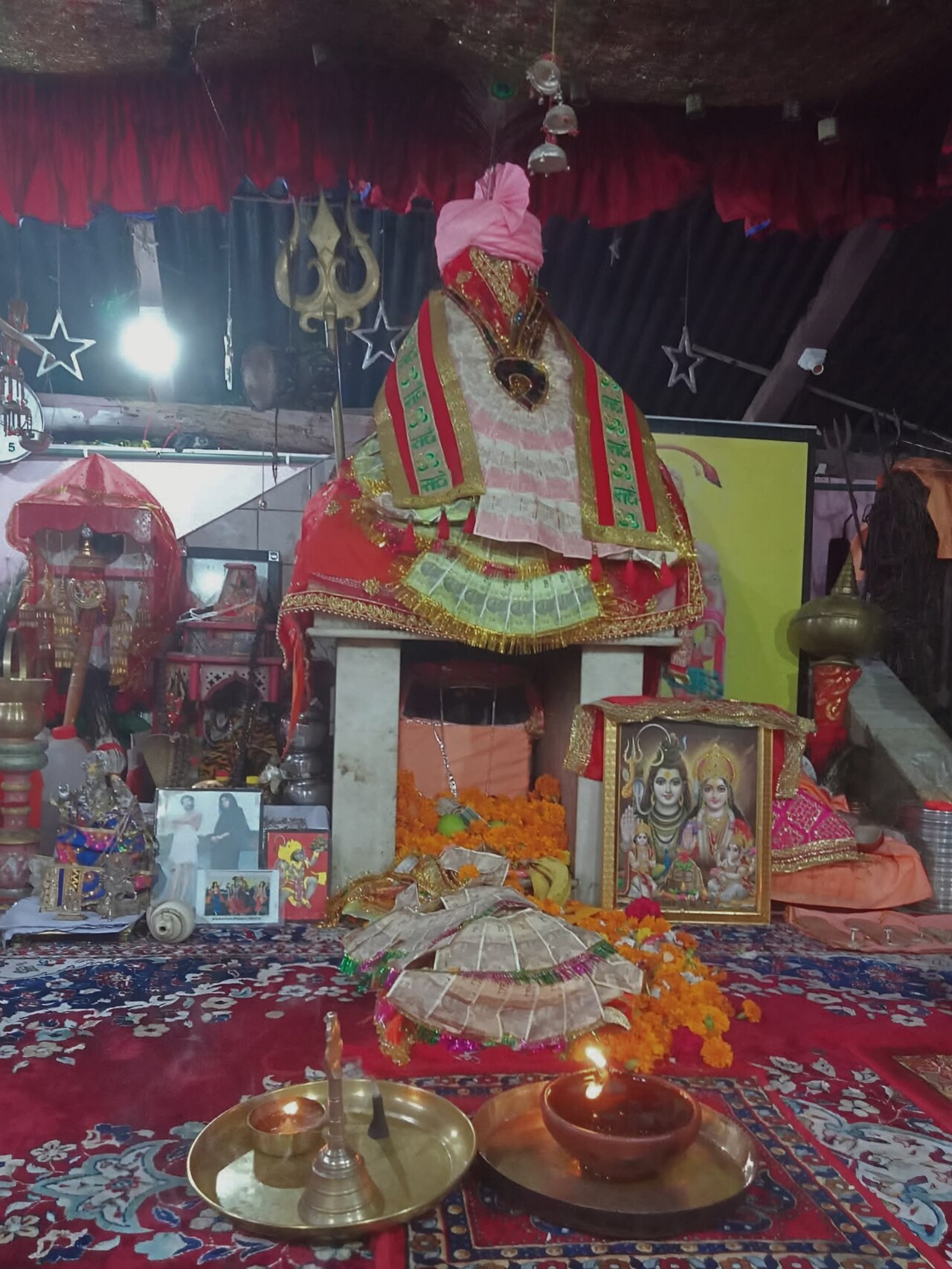
Shivo was also celebrated for his mastery of the dotara, a stringed instrument whose music drew the women of the Kharadkhatri Rajput community in the Goran hills to gather at their doors and listen. The Kharadkhatris regarded this public display of artistry as madness and conspired to kill him while he was absorbed in his playing. They severed his head, which remained at the site, while his body was carried to the Goran hills, where the Babaji temple was later built. The Kharadkhatris were said to have perished under Babaji's curse; survivors fled the area and changed their gotra names. Today, Baba Goran is revered as the KulDev of the Sarmal Clan of Suryavanshi Dogra Rajputs. Devotees from both Hindu and Muslim communities throng the shrine, especially on Sundays and Tuesdays. Fulfilled wishes are repaid with bhandara, and goat sacrifices are offered in Babaji's name. Annually, a wrestling match is held at the shrine, and the Chhadi pilgrimage carries devotees from Samotha to Goran.
Gallery
Frequently Asked Questions
Who is Baba Shivo?
Baba Shivo, also known as Goran Baba, is a Hindu folk deity and warrior-hero from the 13th–14th century whose cult is centered in Jammu and Kashmir and Himachal Pradesh. He is venerated as an avatar of Rudra Ansh and serves as the patron deity of the Sarmal Clan of Suryavanshi Dogra Rajputs.
What are Baba Shivo's powers and role in folklore?
He is regarded as a divine warrior embodying the fierce aspect of Rudra, and his legend highlights extraordinary martial prowess, most notably the slaying of a lion. In popular devotion he functions less as a distant god and more as a protector-king figure tied to a specific clan and region.
How does Baba Shivo's story end?
According to the folk tradition he met his death on the Goran hills, where he was beheaded. This martyrdom is what cemented his status as a folk deity rather than a merely historical ruler, and the hills themselves became a site of veneration bearing his alternate name.
Who are Baba Shivo's parents and where was he born?
He is said to be the son of Raja Ladh Dev (also called Raja Ladhha), who ruled the ancient Kashmiri capital of Pattan, and Queen Kalavati (Rani Kalli). His birth is traditionally placed in Samotha, a locality regarded as holy within the regional lore.
Why is Baba Shivo important to local communities?
He anchors the spiritual identity of the Sarmal Clan of Suryavanshi Dogra Rajputs, who trace their lineage and protection to him. More broadly, his worship bridges the Hindu folk-religious traditions of the Kashmir Valley and Himachal Pradesh, giving those communities a shared warrior-saint figure distinct from mainstream pantheon deities.
More in Indian folklore 1-24
Spotted an error? Know more?
This is a living reference — every entry is fact-audited, and reader corrections feed straight into our audit queue. Suggest an edit · See this site's audit record