
Blind men and an elephant
A parable about subjective truth and limited perception.

Wikipedia / Wikimedia Commons
The parable of the blind men and an elephant is a story from the ancient Indian subcontinent, found in Jain, Hindu, and Buddhist texts. It describes a group of blind men who touch different parts of an elephant and, based on their limited experience, describe it in conflicting ways, illustrating the tendency to claim absolute truth from subjective experience.
- origin
- Ancient Indian subcontinent
- earliest_text
- Jain agams before 5th century BCE
- buddhist_version
- Tittha Sutta, Udāna 6.4, Khuddaka Nikaya, c. 500 BCE
- hindu_reference
- Rigveda (1500–1200 BCE) and Chandogya Upanishad commentary by Adi Shankara
- known_for
- Illustrating limits of perception, subjective truth, and need for multiple perspectives
Lore & Background
The parable appears in the most ancient Jain agams before 5th century BCE. The Buddhist text Tittha Sutta, dated to around c. 500 BCE during the lifetime of the Buddha, contains one version. In it, a king brings an elephant to a group of blind men; each touches a different part and describes the elephant as a pot, winnowing basket, plowshare, plow, granary, pillar, mortar, pestle, or brush. The men quarrel, and the Buddha compares them to preachers and scholars who are blind and ignorant, holding to their own views.
In Hindu tradition, the Rigveda states 'Reality is one, though wise men speak of it variously,' a premise underlying the parable. Adi Shankara references it in his commentary on the Chandogya Upanishad. Jain medieval texts use the parable to explain anekāntavāda (many-sidedness) and syādvāda (conditioned viewpoints), as seen in works by Vidyanandi (9th century) and Ācārya Mallisena (13th century).
The parable also appears in 2nd millennium Sufi and Baháʼí Faith lore. Persian Sufi poet Sanai (1080–1141/1141 CE) presented it in The Walled Garden of Truth, and Rumi included it in his Masnavi. In the 19th century, American poet John Godfrey Saxe created a version with a final verse explaining the elephant as a metaphor for God and the blind men as religions.
Reader's Guide
The parable of the blind men and an elephant has served across multiple religious and philosophical traditions to illustrate the limits of subjective perception and the danger of claiming absolute truth from incomplete experience. Originating in the ancient Indian subcontinent, it appears in Jain, Hindu, and Buddhist texts from before the 5th century BCE, and later in Sufi and Baháʼí lore. The story's core—blind men touching different parts of an elephant and describing it in contradictory ways—highlights how individuals may each hold a true but partial view, leading to conflict when they fail to recognize the validity of others' perspectives. In some versions, the men come to blows; in others, they collaborate or a sighted person reveals the whole truth. The parable has been used to discuss relativism, the nature of truth, the behavior of experts with contradicting theories, and the need for deeper understanding. Its enduring legacy lies in its simple yet profound demonstration that one's subjective experience, while true, is inherently limited and must be integrated with other viewpoints to approach a fuller reality. The story has been published in many books for adults and children and interpreted in a variety of ways.
Did You Know?
- The parable is found in the most ancient Jain agams before 5th century BCE.
- The Buddhist Tittha Sutta, dated to around c. 500 BCE, contains one version of the story.
- In some versions of the parable, the blind men come to blows over their disagreements.
- 19th-century American poet John Godfrey Saxe created a version where the elephant is a metaphor for God.
Ancient Origins in the Indian Subcontinent
The parable traces its roots to the ancient Indian subcontinent, where it first appeared in religious and philosophical texts predating the common era. Among the earliest known iterations, the story is embedded in the most ancient Jain agams, dating to before the 5th century BCE. A parallel version surfaces in the Buddhist Tittha Sutta (Udāna 6.4, Khuddaka Nikaya), composed around 500 BCE during the Buddha's lifetime. Hindu sources also preserve the tale, with the Rigveda—transcribed between 1500 and 1200 BCE from older oral traditions—articulating the underlying principle that a single reality can be described in multiple ways by those who perceive it. In the oldest Hindu variant, four blind men encounter an elephant in a forest and, rather than quarreling, simply conclude they must each have perceived a different creature, even though they all touched the same animal. These foundational texts establish the parable as a shared philosophical inheritance across at least three major Indian religious traditions, all concerned with the boundaries of human perception and the necessity of fuller context.
The Story and Its Many Resolutions
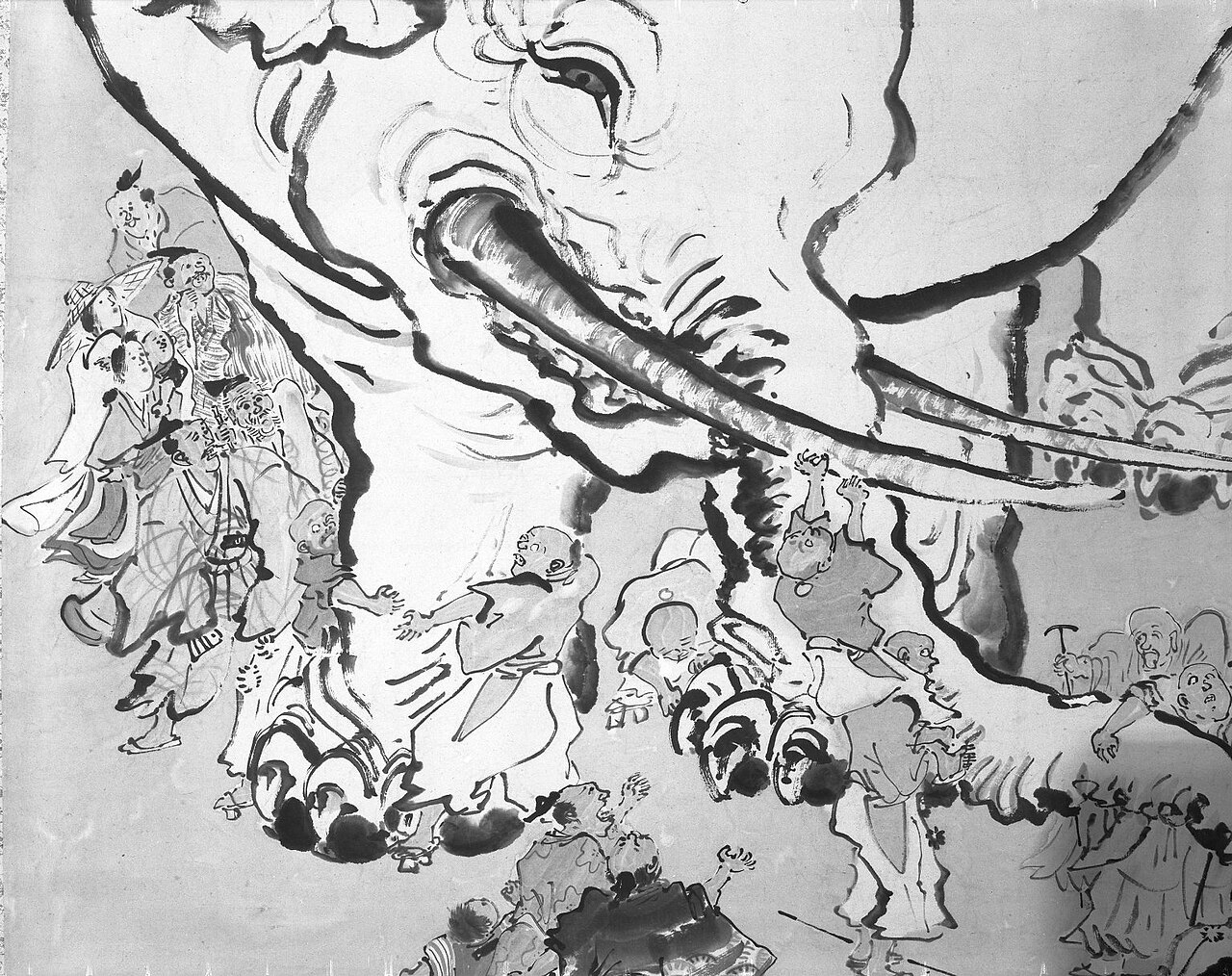
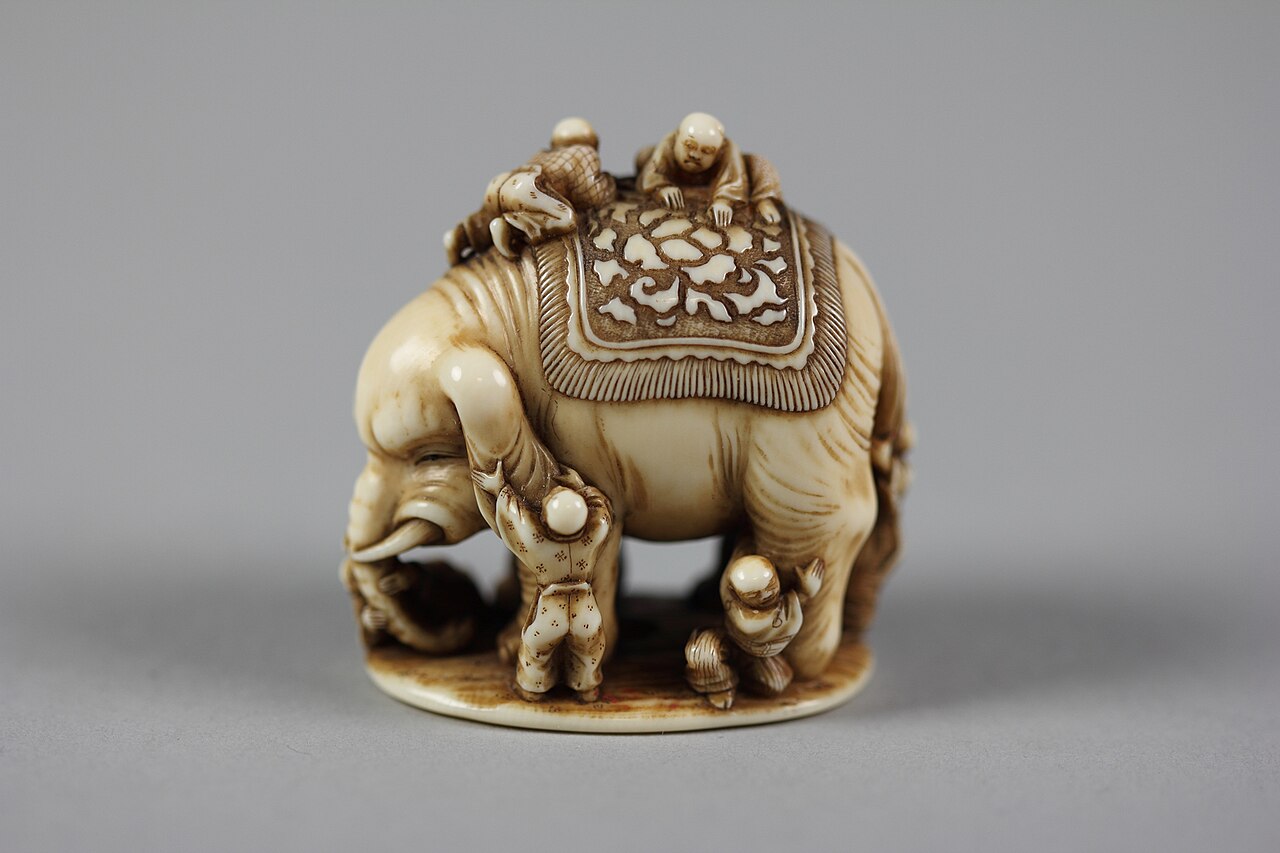
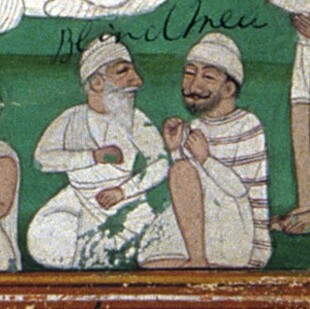
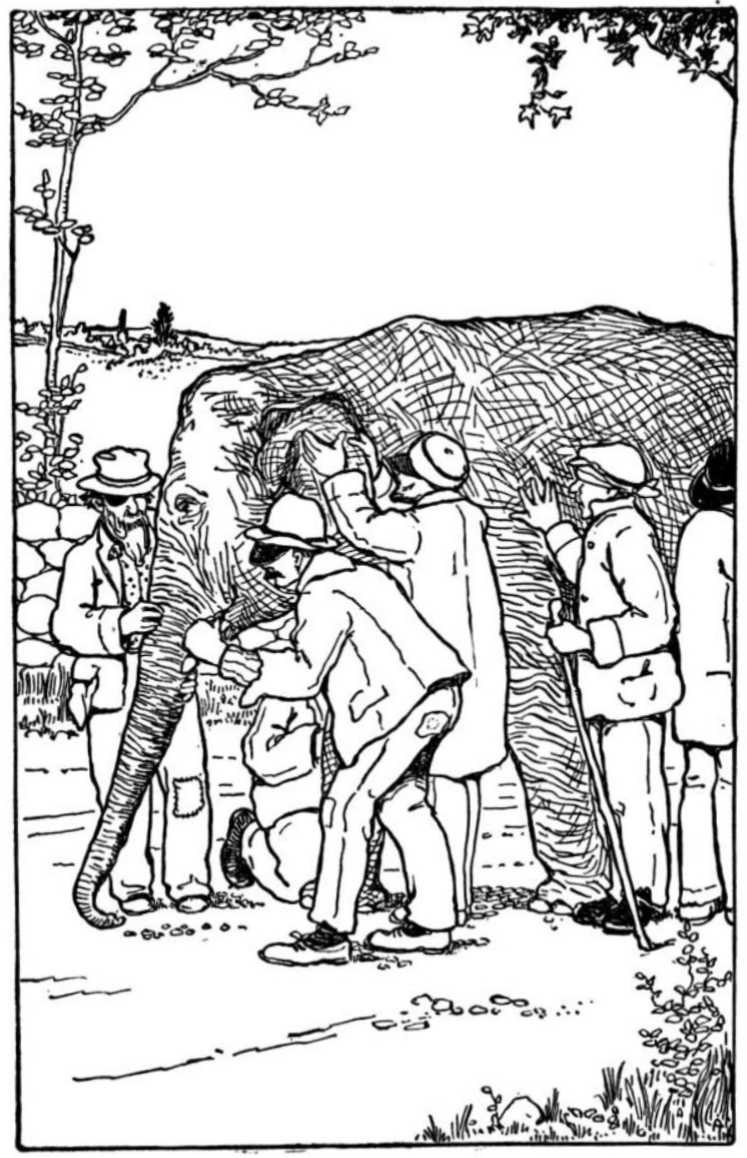
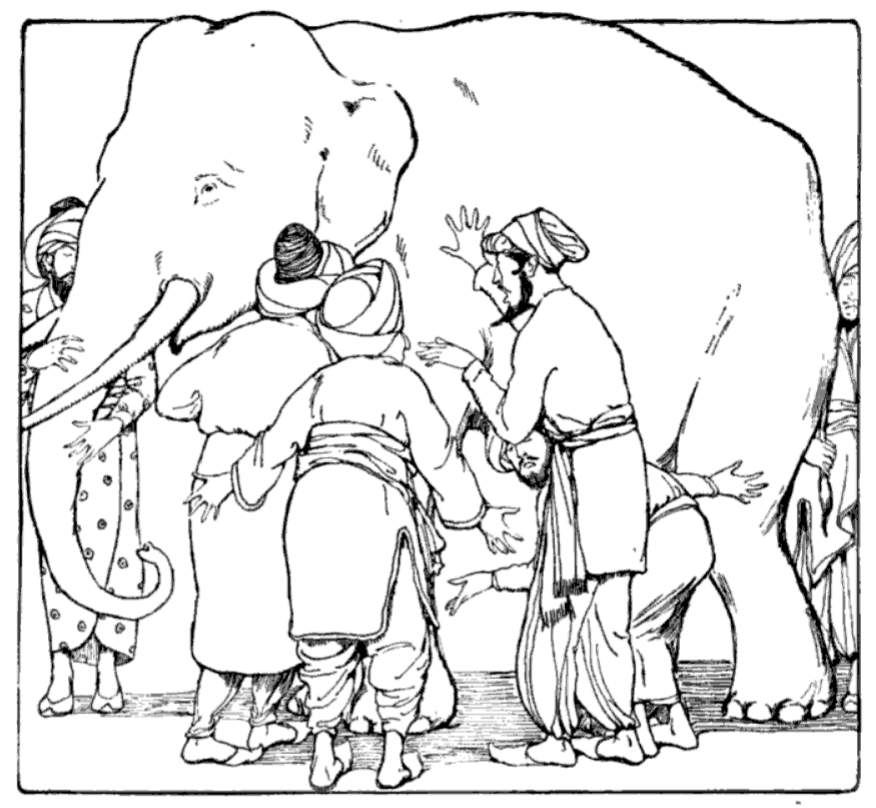
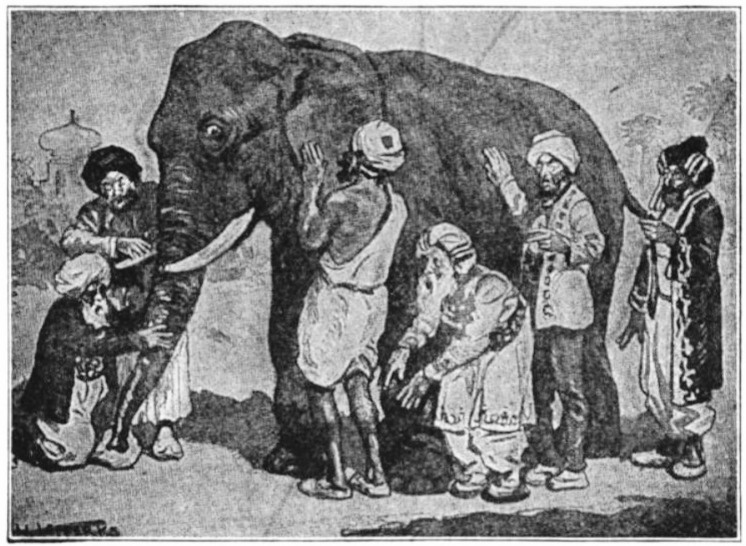
At its heart, the parable follows a group of blind men who, having never encountered an elephant, decide to learn about this strange animal through touch alone. Each man's hand lands on a different part of the creature's body, and each offers a description based solely on that single point of contact. One who grips the trunk compares the animal to a thick snake; another who touches the ear sees a fan; a third, feeling the leg, calls it a pillar like a tree-trunk. A fourth, pressing against the side, declares it a wall, while one who catches the tail likens it to a rope, and the last, feeling the tusk, describes something hard, smooth, and spear-like. The stories diverge significantly in their endings. In some tellings, the men grow suspicious of one another's honesty and resort to physical violence. In others, they fall silent, begin listening, and collaboratively piece together the full picture. A third variant introduces a sighted observer who describes the elephant from multiple angles, helping the men realize each was partially right and partially wrong. The specific body parts described, the intensity of the conflict, and whether resolution is achieved all shift from version to version.
A Parable That Crossed Faiths and Centuries
What began as an Indian philosophical teaching spread across religious traditions and continents over more than two millennia. The parable appears in Jain, Hindu, and Buddhist texts from the first millennium CE or earlier, and it later entered the lore of Sufi and Baháʼí Faith traditions during the second millennium. Its reach extended into European and American culture as well. In the nineteenth century, American poet John Godfrey Saxe composed his own verse adaptation, adding a concluding stanza that reframes the elephant as a metaphor for God and the blind men as representatives of different religions, each insisting on a partial truth about something no single tradition has fully experienced. The story has since been published in countless books for both adults and children, interpreted through a wide range of lenses. Its ability to travel across faiths, languages, and centuries—retaining its core insight while adapting its details—testifies to a universal resonance that no single religious or cultural framework can claim as its exclusive property.
Philosophical Applications and the Limits of Perception
The parable has long served as a practical illustration of deeper philosophical questions about truth, knowledge, and the boundaries of individual experience. Its central moral holds that humans tend to assert absolute truth from their own limited, subjective vantage point while dismissing others' equally valid but different perspectives. In Jain thought, the story underpins the doctrines of anekāntavāda (many-sidedness) and syādvāda (conditioned viewpoints), emphasizing that truth is manifold and that partial understanding can lead to the denial of other valid aspects. The thirteenth-century Jain scholar Ācārya Mallisena used the parable to argue that immature minds, deluded by what they do grasp, reject what they do not. More broadly, the tale has been invoked to illuminate relativism, the inexpressible nature of truth, the behavior of experts working within contradictory theoretical frameworks, and the practical need for deeper understanding and mutual respect when observing the same object from different angles. In this way, it functions as an accessible entry point into ontologic reasoning.
Gallery
More in Indian folklore 1-24
Elsewhere in the Indian Folklore universe
Spotted an error? Know more?
This is a living reference — every entry is fact-audited, and reader corrections feed straight into our audit queue. Suggest an edit · See this site's audit record