
Bharthari (king)
King of Ujjain who renounced the world for spiritual life.

Wikipedia / Wikimedia Commons
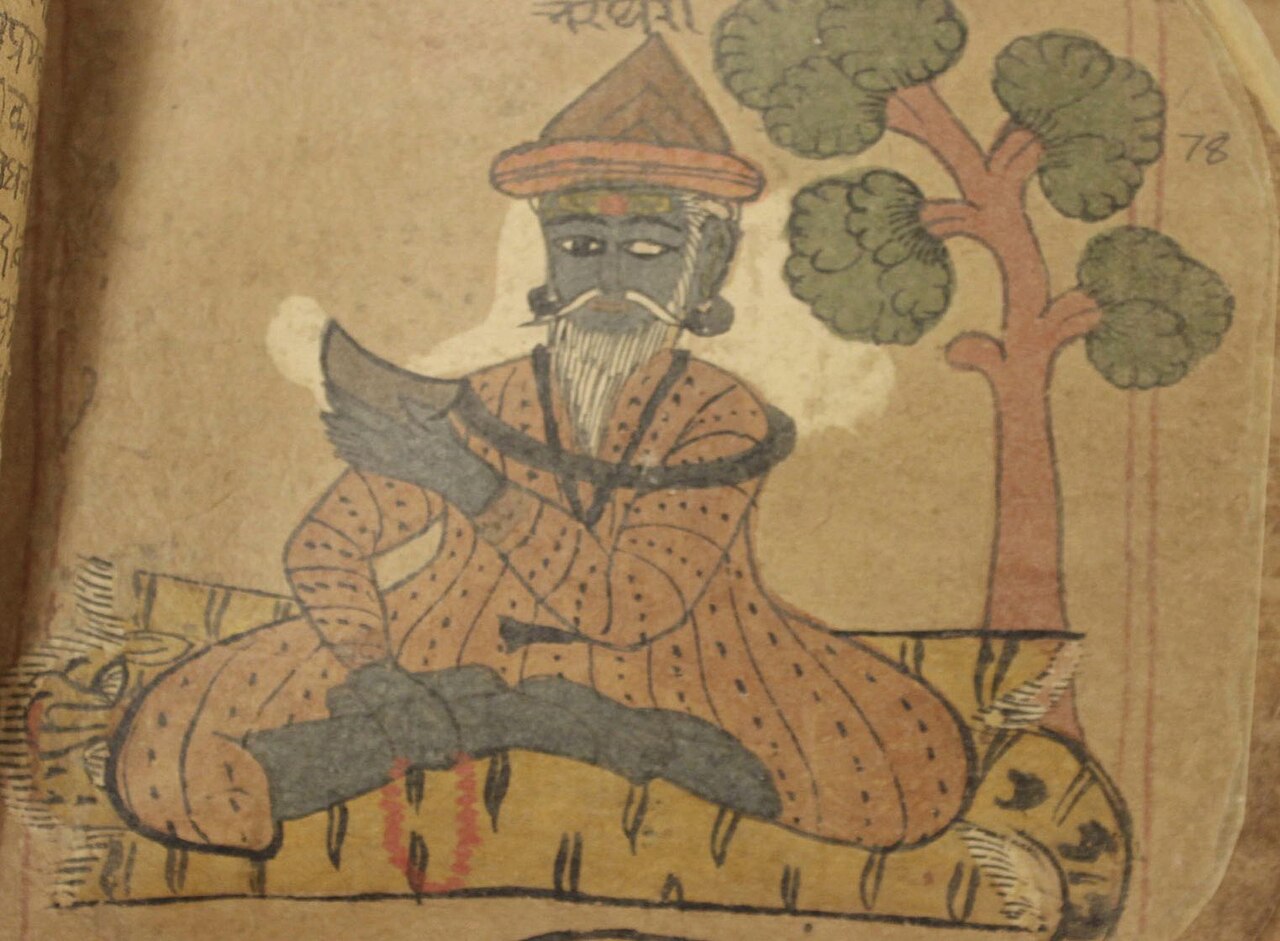
Bharthari is a legendary figure in North Indian folklore, known as the King of Ujjain who renounced his throne and became a religious mendicant. He is based on a historical figure named Bhartrihari and is central to many folk stories across Rajasthan, Punjab, Gujarat, Haryana, Bihar, Uttar Pradesh, Chhattisgarh, and West Bengal.
- born
- Not specified in source
- died
- Not specified in source
- field
- Folklore, kingship, religious mendicancy
- nationality
- North Indian (kingdom of Ujjain)
- known_for
- Renouncing the throne of Ujjain; becoming a Nath panth yogi; subject of folk tales and the Baital Pachisi
Lore & Background
In another Chhattisgarhi oral epic, a saint gave Queen Pingalah holy water, and she bore a son after twelve months. A separate story tells of Bharthari testing his queen's fidelity after witnessing a sati; he faked his death, and Pingalah died of grief. Guru Gorakhnath created 750 copies of Rani Pingala to show the illusory nature of the world, and Bharthari became a follower of Gorakhnath, known as Sant Bhartrhari. His worship is celebrated on Ashtami in Alwar, Rajasthan, with a fair near Sariska.
Reader's Guide
Bharthari's significance lies in his role as a central figure in North Indian folklore, embodying themes of renunciation, betrayal, and spiritual awakening. His stories, often intertwined with those of his brother Vikramaditya and nephew Gopi Chand, are preserved in oral epics and the Baital Pachisi (translated by Sir Richard Francis Burton in 1870). These tales reflect cultural values around kingship, fidelity, and the illusory nature of worldly attachments, as seen in his transformation from a king to a Nath panth yogi. Bharthari's legacy endures through regional festivals, such as the Ashtami worship in Alwar, and through literary works like Meignana Pulambal. His narratives continue to be sung by bards in Chhattisgarh and studied in academic works, highlighting their lasting impact on Indian folklore and religious thought.
Did You Know?
- Bharthari was the elder son of King Gandharva Sena, who received the kingdom of Ujjain from the celestial god Indra.
- He abdicated his throne to his younger brother Vikramaditya after discovering his queen's infidelity through a fruit of immortality.
- Bharthari became a disciple of the Tamil saint Pattinathar and wrote a collection of Tamil poetic verses called Meignana Pulambal.
- Guru Gorakhnath created 750 copies of Rani Pingala to demonstrate the illusory nature of the world to Bharthari.
The Fruit of Immortality and the Breaking of a Kingdom
Bhartrhari's reign over Ujjain—known in the tales as Ujjayani—was ultimately undone not by war or rebellion but by a single enchanted fruit. A Brahman, having earned the fruit of immortality from the celestial Kalpavriksha through years of austerity, brought it to the king. Bhartrhari intended to restore the youth of his beloved queen, Pinglah (also called Ananga Sena in Kalidas's version). Yet the fruit passed through a chain of desire: the queen, harboring a secret attachment to army chief Mahipala, gave it to him; Mahipala passed it to his own beloved, Lakha, the head mistress. When the fruit completed its circuit and returned to the king, it laid bare the full architecture of infidelity. The king summoned the queen and ordered her beheading, then consumed the fruit himself. In the aftermath, he relinquished the throne to his younger brother Vikramaditya and set out as a religious mendicant, trading royal power for the road.
A Story Sung Across Eight States
Bhartrhari's legend is not confined to a single region; it is a pan-North-Indian oral tradition. His tales, often intertwined with those of his nephew King Gopi Chand of Bengal—both regarded as Nath panth yogis—circulate through the folklore of Rajasthan, Punjab, Gujarat, Haryana, Bihar, Uttar Pradesh, Chhattisgarh, and West Bengal. In Chhattisgarh, bards preserve a famous song in his memory, recounting how a saint granted Queen Pingala a son through holy water after twelve months. Academic scholars have documented these traditions in works such as Nandkishore Tiwari and colleagues' Bharthari: A Chhattisgarhi Oral Epic (2002) and Ann Grodzins Gold's study of the tales as sung by Madhu Natisar Nath of Ghatiyali, Rajasthan. The breadth of geographic and linguistic spread testifies to a story that has been continuously retold, reshaped, and cherished across centuries and communities.
The King Who Became a Saint
The transformation from sovereign to mendicant is the spiritual core of Bhartrhari's legend, told in multiple versions. In one Tamil-rooted account, he became a disciple of Pattinathar (Swetharanyar, originally from Poompuhar). After a debate on worldly life versus renunciation, the king relayed the saint's remark about women's dual mind to Queen Pingalah, who ordered Pattinathar subjected to the kalu maram—a sharpened, oil-painted tree meant to split a person in two. The punishment failed; the tree burned while the saint was unharmed. The king, weeping, released him and, having seen the queen with a horseman, cast off his royal garments for a simple loin cloth. He attained mukthi at the Kalahasthi temple and composed the Tamil poetic collection Meignana Pulambal. In another tradition, Guru Gorakhnath created seven hundred and fifty copies of Rani Pingala to demonstrate the world's illusory nature, after which Bhartrhari renounced everything and became known to North Indians as Sant Bhartrhari.
Worship, Festivals, and the Written Record
Bhartrhari's legacy extends well beyond oral storytelling into living religious practice and the written record. In Alwar, Rajasthan, he is celebrated with great fervor: the fair of Bharthari draws lakhs of devotees from Alwar, Jaipur, and Dausa near Sariska, and Ashtami is observed as his worship day. His story also entered the broader literary canon through the Baital Pachisi (Twenty-five Tales of Baital), a collection of tales about him and his brother Vikramaditya that Sir Richard Francis Burton translated into English in 1870 as Vikram and The Vampire. Academic scholarship has further examined his connections to Buddhist traditions (Radhika Herzberger, 1986) and preserved original manuscripts, including a Gurmukhi-script text on Raja Gopi Chand held in the Panjab Digital Library. These layered records—folk song, festival, translation, and academic study—ensure that the king who walked away from Ujjain remains a living figure in Indian cultural memory.
Gallery
More in Indian folklore 1-24
Spotted an error? Know more?
This is a living reference — every entry is fact-audited, and reader corrections feed straight into our audit queue. Suggest an edit · See this site's audit record