
Barlaam and Josaphat
Christian saints whose legend derives from the life of the Buddha.

Wikipedia / Wikimedia Commons
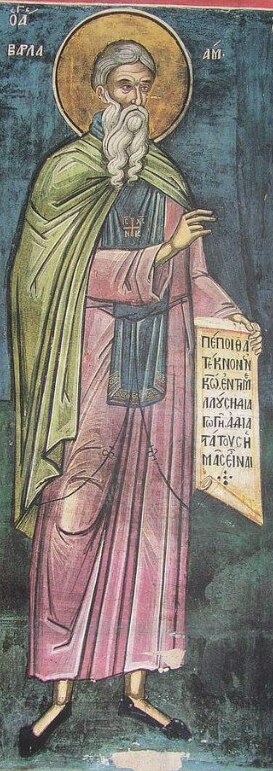
Barlaam and Josaphat are Christian saints whose story recounts the conversion of Prince Josaphat to Christianity. The tale is widely regarded as a Christianized adaptation of the life of Siddhartha Gautama, the Buddha, and was popular in medieval Europe through works such as the Golden Legend. The narrative traces its origins from a Sanskrit Mahayana Buddhist text through Manichaean, Arabic, and Georgian versions before entering Greek and Latin Christian tradition.
- field
- Christian hagiography
- known_for
- Christian saints whose legend parallels the life of the Buddha; story of conversion and monastic retreat
- feast_day_Roman
- 27 November (earlier Roman Martyrology; not in Roman Missal after 1960)
- feast_day_Orthodox
- 26 August Julian (8 September Gregorian) in Greek tradition; 19 November Julian (2 December Gregorian) in Slavic tradition
Lore & Background
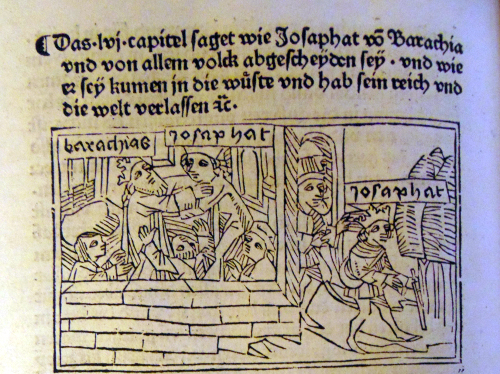
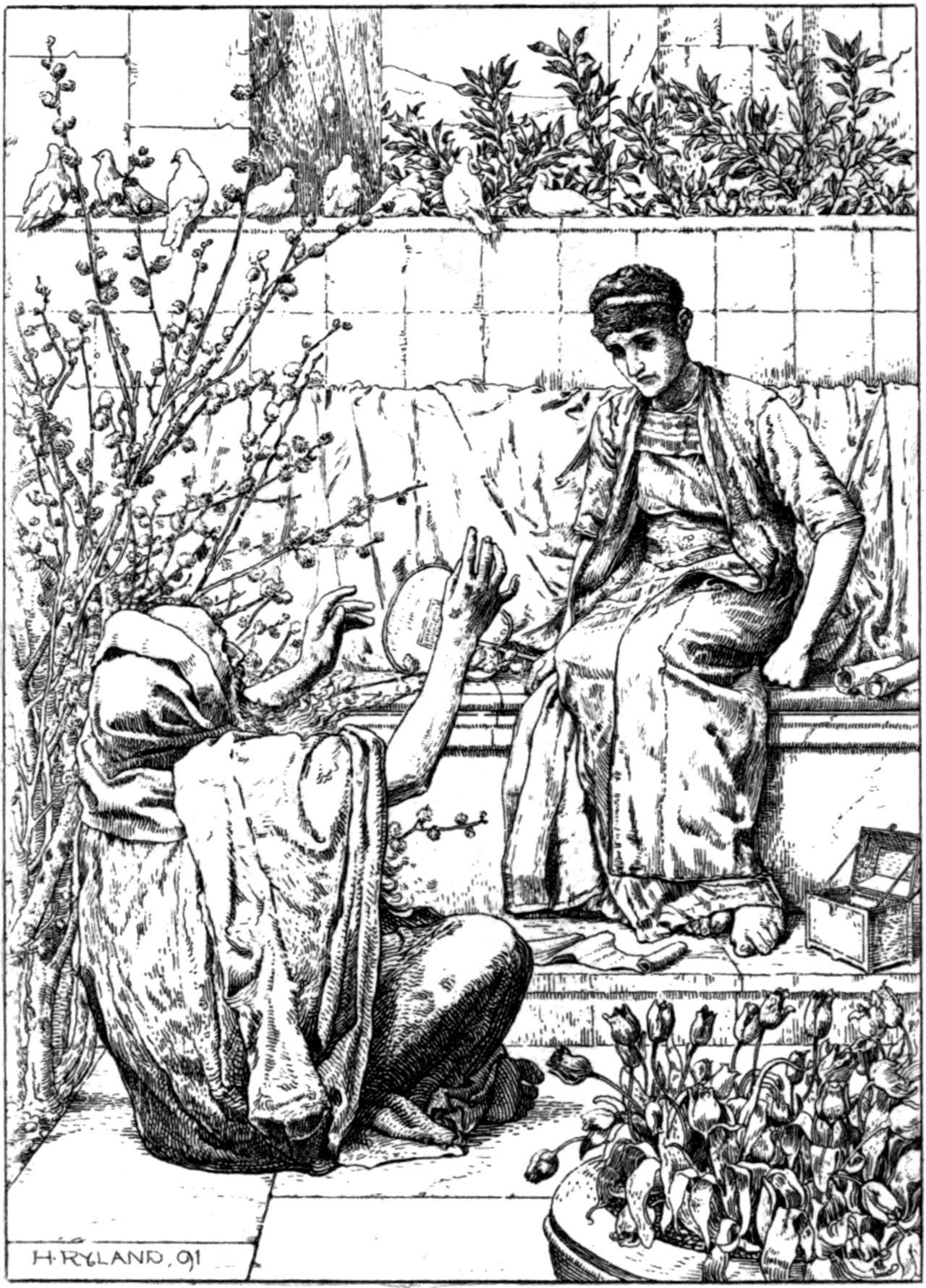
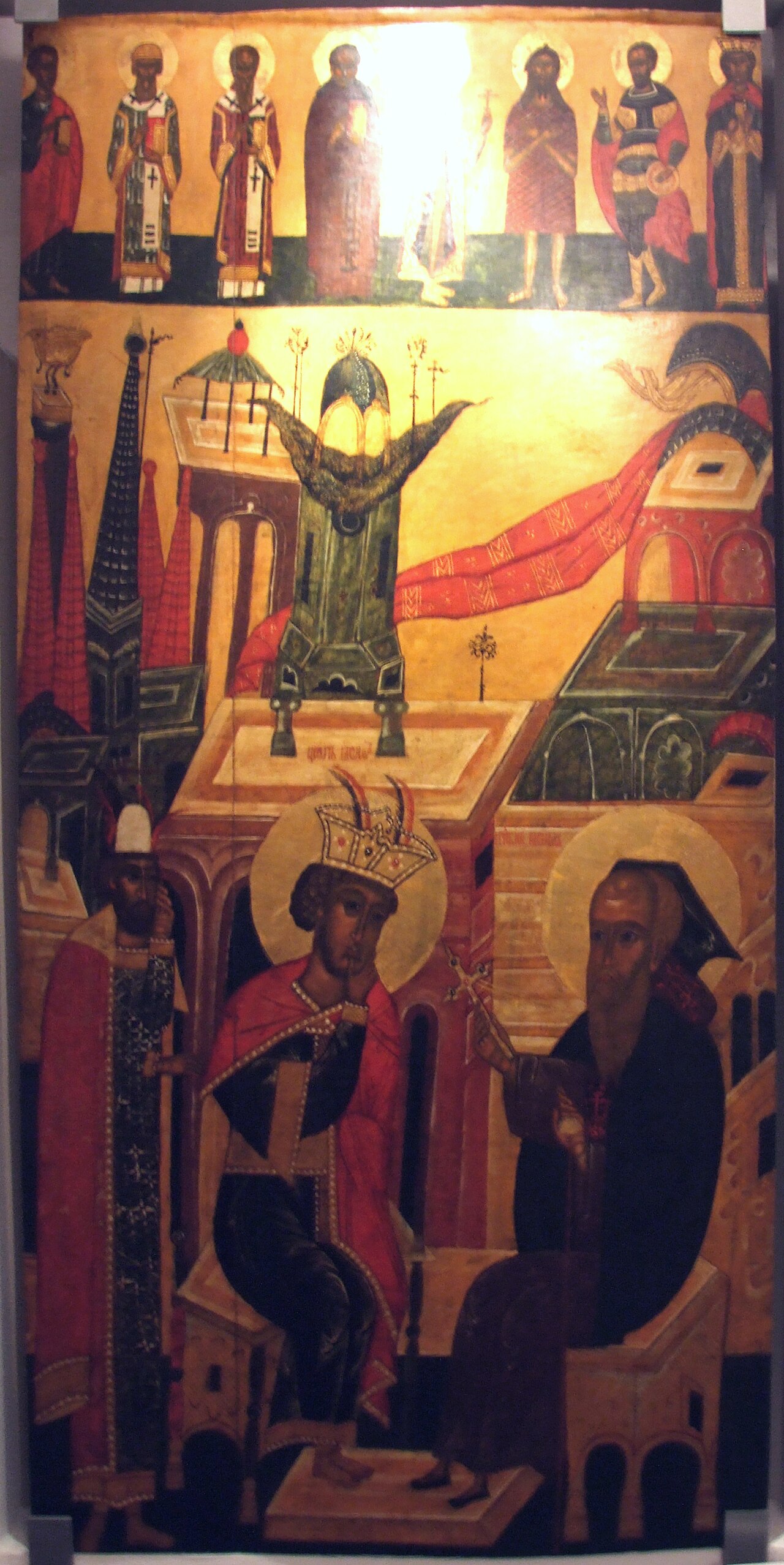
According to the legend, King Abenner in India persecuted the Christian Church in his realm, founded by the Apostle Thomas. When astrologers predicted that his own son would become a Christian, Abenner had the young prince Josaphat isolated from external contact. Despite the imprisonment, Josaphat met the hermit Saint Barlaam and converted to Christianity. Josaphat kept his faith even in the face of his father's anger and persuasion. Eventually, Abenner converted, turned over his throne to Josaphat, and retired to the desert to become a hermit. Josaphat himself later abdicated and went into seclusion with his old teacher Barlaam.
Reader's Guide
The story of Barlaam and Josaphat is significant as a prime example of cultural and religious transmission across Asia and Europe. Originating from a second- to fourth-century Sanskrit Mahayana Buddhist text, it passed through Manichaean and Arabic versions before being Christianized in the Georgian epic Balavariani in the 10th century. The Greek translation by the Georgian monk Euthymius of Athos, completed before his death in 1028, was rendered into Latin in 1048 and became widely known in Western Europe. The legend was sometimes attributed to John of Damascus in 18th- and 19th-century scholarship, but this was refuted by scholars F. C. Conybeare and Paul Peeters, who showed the Georgian, Arabic, and Sanskrit origins. The tale's popularity in the Middle Ages is attested by its inclusion in the Golden Legend and its influence on Shakespeare's 'The Merchant of Venice' via the scene of the three caskets. The recognition that Josaphat represents the Buddha venerated as a Christian saint was established by Edouard de Laboulaye and Felix Liebrecht in 1859–1860. The story was also used in the 16th century to defend monastic life and free will during the Protestant Reformation.
Did You Know?
- The name Josaphat derives from the Sanskrit bodhisattva, via Middle Persian and Arabic transformations.
- The story of Barlaam and Josaphat appears in the Golden Legend and influenced Shakespeare's 'The Merchant of Venice' through the three caskets scene.
- The first Christianized adaptation was the 10th-century Georgian epic Balavariani.
- The tale was used in the 16th century as a defense of monastic life and free will against Protestant doctrines.
The Narrative Arc: From Persecution to Renunciation
The legend centers on King Abenner of India, who ruled over a Christian community originally established by the Apostle Thomas. His persecution of the Church set the stage when astrologers foretold that his own son would embrace the Christian faith. In response, Abenner sealed the young prince Josaphat away from all outside contact. Yet the isolation proved futile: Josaphat encountered the hermit Saint Barlaam and underwent a profound conversion. He held fast to his new faith despite his father's fury and attempts to dissuade him. The story reaches its resolution when Abenner himself is moved to accept Christianity, relinquishes his throne to his son, and withdraws to the desert as a hermit. Josaphat, in turn, eventually abdicates his own rule and retreats into seclusion alongside his former teacher Barlaam. The arc moves from persecution to conversion, from throne to desert, embodying a radical renunciation of worldly power in favor of spiritual devotion.
A Tale's Migration Across Languages and Centuries
The story's journey across languages and centuries is extraordinary. It originated in a Sanskrit Mahayana Buddhist text dating to the second through fourth centuries, passed through a Manichaean rendering, and then appeared in Arabic as the Kitāb Bilawhar wa-Būdāsaf, circulating in eighth-century Baghdad. From there it entered Middle Eastern Christian communities before reaching Europe. The earliest Christianized adaptation was the tenth-century Georgian epic Balavariani. A Georgian monk named Euthymius of Athos rendered the tale into Greek before his death in 1028, and a Latin translation followed in 1048, launching the story's wide circulation across Western Europe. The names themselves trace this migration: the Sanskrit bodhisattva became Bodisav in Middle Persian, shifted to Būdhasaf in Arabic (with a handwritten dot duplication changing the initial consonant), evolved into Iodasaph in Georgian, Ioasaph in Greek, and finally Josaphat in Latin. Similarly, Bilawhar passed through Georgian Balahvar into the Greek Barlaam.
Medieval Literary Influence and Reformation Polemics
The tale saturated medieval European literature and thought. It appeared in the Golden Legend, and a particular scene involving three caskets traveled through Caxton's English translation of a Latin version into Shakespeare's The Merchant of Venice. The thirteenth-century Anglo-Norman poet Chardri composed La vie de seint Josaphaz, while the French encyclopedist Vincent of Beauvais devoted a substantial portion of book fifteen of his Speculum Historiale to the Josaphat and Barlaam narrative. In the German-speaking world, Bishop Otto II of Freising produced the Laubacher Barlaam, and Rudolf von Ems crafted a verse romance that Heinrich Heine later called perhaps the finest flowering of religious literary creativity in the German Middle Ages. The story also served a polemical purpose in the sixteenth century, being retold as a defense of monastic life during the Protestant Reformation and as an argument for free will against Protestant predestination theology.
The Hidden Buddha: Scholarly Revelation of the Legend's Origin
Perhaps the most remarkable dimension of this legend is its true origin. The story of Josaphat is, in essence, a Christianized retelling of the life of Siddhartha Gautama, the Buddha. The parallels between Josaphat's life and teachings and those of the Buddha are extensive, yet this connection remained hidden for roughly a millennium. It was not until the mid-nineteenth century that scholars finally recognized that the Buddha had been venerated under a Christian name for about a thousand years. Earlier, in the eighteenth and nineteenth centuries, some scholars had even attributed the Greek legend to the eighth-century John of Damascus, believing it to be his original composition. This was decisively refuted by F. C. Conybeare and Paul Peeters, who demonstrated the Georgian, Arabic, and Sanskrit roots of the work. Even Marco Polo, in one of his manuscripts, noted the striking resemblance between the tale of St. Josaphat and the Mongol name for the Buddha, Sakyamuni Burkhan, without grasping the deeper connection.
Gallery

Frequently Asked Questions
What is the Barlaam and Josaphat story?
It is a hagiographic legend recounting how Prince Josaphat is converted to Christianity by a monk named Barlaam and then renounces his royal life for monastic devotion. The tale became especially widespread in medieval European Christian culture, notably through the Golden Legend.
How does Barlaam and Josaphat connect to the Buddha?
The narrative is widely understood as a Christianized retelling of Siddhartha Gautama's life, with Josaphat standing in for the Buddha and Barlaam filling the role of a spiritual guide. The story's earliest identifiable source is a Sanskrit Mahayana Buddhist text that was later reshaped into Christian hagiography.
How did the legend travel from India to European Christianity?
The tale moved through a long chain of cultural adaptations, passing from its Sanskrit Buddhist origin into Manichaean, Arabic, and Georgian retellings before being rendered in Greek and Latin Christian forms. Each successive version reframed the narrative to suit the religious context of its new audience.
What actually happens in the Barlaam and Josaphat narrative?
Prince Josaphat, kept isolated from the realities of aging, illness, and death, eventually confronts human suffering and seeks a teacher who can explain life's meaning. The monk Barlaam converts him to the Christian faith, and Josaphat abandons his throne to live as a devoted ascetic.
When are the feast days for Barlaam and Josaphat?
The Greek Orthodox tradition commemorates them on 26 August Julian (8 September Gregorian), while the Slavic tradition observes 19 November Julian (2 December Gregorian). The older Roman Martyrology listed 27 November, but that entry was removed after the 1960 revision of the Roman Missal.
More in Indian folklore 1-24
Elsewhere in the Indian Folklore universe
Spotted an error? Know more?
This is a living reference — every entry is fact-audited, and reader corrections feed straight into our audit queue. Suggest an edit · See this site's audit record